Category: Diversions

Now at the Speed Cinema: ‘The Seer: A portrait of Wendell Berry’

From the Speed’s website: “Traversing four seasons of the farming cycle in Henry County, Ky., this documentary illustrates Wendell Berry’s agrarian philosophy. Berry moved back to the Henry County rural community in 1965, where he settled into a life of farming, writing, and teaching, with the relationship of the individual to land and community being central to his work. Within one generation, the balance between these core issues has been tested by the commercialization of agriculture.” Here’s a clip:

Directed by Laura Dunn. Co-producers: Gill Holland of Louisville; Nick Offerman of “Parks and Recreation”; and Owsley Brown III, a documentary filmmaker in San Francisco.

Tickets: $7 for members; $9 for non-members. Show times, with links to buy tickets:

* director Dunn will be there in person.


About the cinema

Speed Art Museum logoThe 142-seat theater is part of the newly renovated museum’s expansion. It’s equipped with state-of-the-art technology, including 16-mm, 35-mm and DCI-compliant 4K digital projection systems.
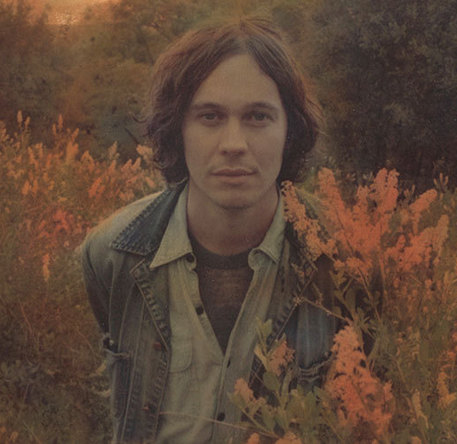

At tonight’s Forecastle Festival, the chillwave Georgia man behind ‘Portlandia’s’ dreamy theme music

There are so many things to anticipate at the annual three-day Forecastle music festival starting tomorrow at Waterfront Park, including artisanal corn dogs (they had them last year), and luxury, air-conditioned bathrooms for those who’ve sprung for $400 weekend VIP tickets.

Forecastle logoBut most of all, a performance by Washed Out from 8:30 to 9:30 p.m. ET tonight. Recorded by Ernest Greene — that’s him in the photo, top — Washed Out is known to many for “Feel It All Around,” the opening theme for the hit IFC series “Portlandia.” Listen to it in the music player in the sidebar, left, or in the video, below:
Greene, 33, was born in Perry, Ga. His recordings fall within genres that include chillwave, and dreampop, according to Wikipedia. From Forecastle’s bio:

His music has been nothing if not dreamy, but for his second full-length, he’s taken the idea of letting your mind wander to another state a huge leap further. On “Paracosm,” the musician explores the album’s namesake phenomenon, where people create detailed imaginary worlds. The concept has been used to describe fantasy lands like Tolkien’s Middle Earth and C.S. Lewis’ Narnia, and it’s at the heart of the 2004 documentary “In The Realms Of The Unreal,” about outsider artist Henry Darger.

As the Seelbach shutters the Oak Room for remodeling, recalling the louche Rathskeller’s heyday

getimage.exe
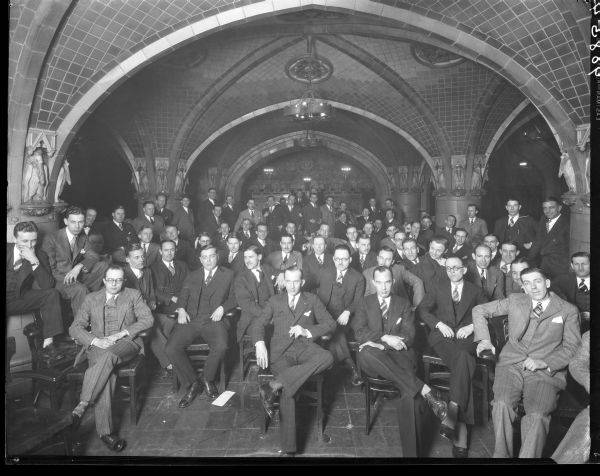
Mobster Al Capone reportedly hung out in the Rathskeller.
Members of the American Business Club met in the Seelbach Hotel’s Rathskeller in March 1928, in this photo from the University of Louisville Photographic Archives. Pelican sculptures created by Rookwood Pottery of Cincinnati embellish the columns in what was a booming night club in the 1920s and 1930s.

The Seelbach has just announced the Rathskeller’s sister venue, the Oak Room, is closing for a summer-long renovation, according to The Courier-Journal.

Great GatsbyRathskeller (“council’s cellar” in German) is a name in German-speaking countries for a bar or restaurant in the basement of a city hall. At the Seelbach, the name reflected the background of the hotel’s Bavarian-born founders, brothers Louis and Otto Seelbach. They opened the hotel in 1905 as Louisville’s answer to the old-world grandeur of European hotels in Vienna and Paris.

Louis arrived in 1869 at 17 years old, and his brother followed in 1891, during a wave of German immigration that transformed Louisville’s economy. Already by 1850, Germans accounted for nearly 20% of the city’s 43,000 residents.

The Seelbach also played a cameo role in F. Scott Fitzgerald’s “The Great Gatsby,” as the setting for Louisville debutante Daisy Fay’s wedding to Tom Buchanan of Chicago.

Ali Center: Visits will jump 50%, to 150,000, this year after prize-fighter’s death

Ali Center logoThis year’s surge would follow several previous years when attendance stagnated at around 75,000 to 80,000, spokeswoman Jeanie Kahnke told The Courier-Journal for a story this morning.
Some 25,000 people have visited the center since June 3 alone, the day the prize-fighting Louisville native and humanitarian died in Phoenix after battling Parkinson’s disease for decades. CEO Donald Lassere said the steady stream of visitors will be “the new norm for the foreseeable future.”

The center opened in 2005 at a cost of $80 million after years of planning and fundraising.

Sip to this next weekend: Brown-Forman officially launches its first new bourbon brand in 20 years

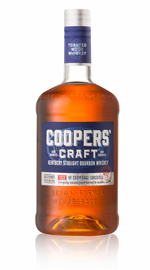
It’s Cooper’s Craft, which Brown-Forman first announced in April. The new brand reflects the value the Louisville-based spirits giant places on building its own barrels, and the flavor good wood adds to the final mix.

Coopers Craft smallerBF and Louisville Magazine are hosting the launch party Friday, July 8, from 6 to 8 p.m. at The Pointe, 1205 E. Washington St. in Butchertown. Tickets are $20, which includes three drinks, live music by the Whiskey Bent Valley Boys, plus a barrel-raising demonstration. Details here.
Brown-Forman established its own cooperage in 1945 and to this day, is the only major distiller to build barrels at its own in-house cooperage, as this video explains:

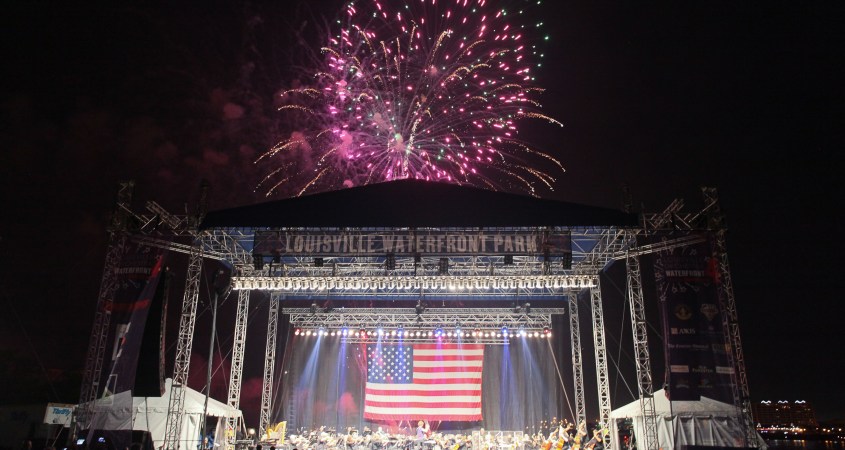
Sound the cannon! Ring those bells! Sunday brings Abrams, the orchestra — and the ‘1812’ Overture to Waterfront Park

Music Director Teddy Abrams will lead the full Louisville Orchestra at Waterfront Park Sunday in the city’s annual July 4th celebration. All the cool fun starts at 5 p.m., with fireworks sponsored by the Louisville Bats. More details here.

Here’s the orchestra last year performing Tchaikovsky’s 1812 Overture, written in 1880 and now a staple for Fourth of July celebrations:

How did 1812 become the orchestral community’s answer to ballet’s Nutcracker? Credit Arthur Fiedler and the Boston Pops’ televised performance in 1974, replete with cannons, an expanded bell choir and fireworks, according to the Houston Chronicle.