The Fund for the Arts said it received $8.7 million in contributions during its fundraising campaign ended last month, up slightly from last year’s $8.6 million. The money will be distributed to more than 100 charities, schools and other nonprofits to support arts programs, according to The Courier-Journal.
But in announcing the figures, the 67-year-old organization warned Louisville’s economy has made it harder to raise more money, especially when big contributions from companies such as GE Appliances and Humana may be threatened by ownership changes.
With $179 million, the Humana Foundation is the fourth-largest foundation in Louisville, according to Boulevard’s database of richest nonprofits. While it’s legally separate from the company, their leadership overlaps. The foundation’s five directors are Humana CEO Bruce Broussard; General Counsel Christopher Todoroff; board member David A. Jones Jr.; his father, company co-founder David A. Jones Sr., and Chairman Michael McCallister, a retired Humana CEO and former chairman.
McCallister
It’s unclear whether Aetna would change any of those officers — and the foundation’s giving, too — assuming the Hartford insurer completes its $37 billion purchase of Humana. That deal is subject to final regulatory approval, a hurdle that’s recently grown higher within the Department of Justice’s antitrust division.
Richard Meadows‘ plan began simply enough: The Auckland journalist was feeling weak and out of shape, with nagging injuries that hobbled his amateur career in strength sports.
“What better way to restore myself to peak physical condition,” he writes in a first-person account in this morning’s Star-Times newspaper, “than to hit the gym hard while devouring an entire pizza every day? With a whopping 1,600 calories and a decent chunk of protein, the Domino’s $5 range represented absurdly good value for money.”
But then social media, plus a tad bit of Meadows’ oversharing, led to a betrayal by an unhappy Domino’s — throwing a wrench in his plan. “To commemorate my 100th pizza, I’d posted a photo to their Facebook page, reclining on the boxes I’d collected and sharing a few highlights from the journey to date: ‘Bowel movements now arrive every hour on the hour, and the cheese nightmares are becoming less frequent!'”
His post racked up several thousand “likes” that same night. But when he woke up the next morning, “my heartfelt tribute had been deleted without explanation,” he said. “The relationship was over.”
That’s when Meadows — who also documented his caloric journey on Instagram — turned to a Pizza Hut restaurant on Dominion Road in Auckland. Within days, he and the manager, identified only as Hriday, were on first-name terms. “Hriday never judged me for my gluttonous ways, and we soon built a rapport. He worked long hours, and Sunday was his only day off. If I went to a different branch during the week, he would worry.”
HUMANA and Aetna now face an uphill battle persuading antitrust enforcers their planned $37 billion deal won’t harm competition, after high-level talks between the Justice Department and company officials yesterday ended without public word of their outcome. It isn’t clear when the agency will make a final call. Company officials have been preparing for a decision as soon as this month, according to The Wall Street Journal, which cited people familiar with the matter that the newspaper didn’t identify. But officials also disclosed June 24 that they’d extended the deadline for completing the deal until the end of the year.
Humana’s stock has been reeling since news of the negotiations suddenly emerged mid-day Thursday; shares have fallen 11% since the day before. Aetna’s stock has fallen, too, but by a far smaller 2%, reflecting what investment bank JP Morgan said yesterday is the Louisville company’s greater downside risk if the deal collapses (chart, top).
JP Morgan downgraded Humana’s stock to “neutral” from “overweight,” after the probability of a deal approval declined well below a 50/50 chance, analyst Gary Taylor said. If the deal were not to happen, Humana’s shares could fall to a range of as low as $115 to $125. At $115, Humana would have sunk to the lowest level since May 6, 2014, when shares closed at $109.79.
That grim outlook isn’t universal. Wedbush Securities analyst Sarah James told CNBC: “We’re 80 to 90% confident that the Aetna deal is going to go through,” she said (CNBC).
The developments at Humana-Aetna and two other companies also planning a merger — Anthem and Cigna, for $48 billion — “are the latest signs that federal officials are worried about consolidation among health insurers,” the WSJ says. The deals “would reshape the top of the industry, collapsing five large insurers into three giant firms, each with annual revenues of more than $100 billion” (Wall Street Journal).
But it’s unclear how much of that support will continue in the future, after the conglomerate sold its GE Appliances division last month to China-based Haier for $5.6 billion. The deal included 6,000-employee Appliance Park in the city’s south end, a fixture since it opened nearly 65 years ago.
Corporate foundations tend to favor communities where they have employees. In April, GE pledged to donate $50 million over five years to philanthropic causes in Massachusetts, as it prepares to move its corporate headquarters to Boston from Fairfield, Conn. In 2014, the foundation gave $85.9 million to charities, according to its most recent IRS tax return.
Klee, the new president, runs GE’s Environment Health & Safety. She’s replacing Deborah Elam, who’s retiring from the company at the end of the year.
“As many as 23 of the 24 voting delegates may line up behind the Arizona senator on the first ballot Wednesday night,” The Courier-Journal’s Richard Harwood reported on the front page from the convention city of San Francisco.
Inside the paper, newly-named food consultant Loyta Higgins suggested readers bake “peachy ham balls” from leftover ham and canned cling peaches in heavy syrup. (Remember, it was the ’60s!)
And on page 10, GE Appliances competitor Kelvinator was advertising washers for $179.95 with a trade-in — or $299.95 with a matching dryer. You could buy them at 13 Louisville retailers, including Bill’s Auto Stores at Broadway and Shelby Street.
Fast-forward 52 years, and you can appreciate how incredibly expensive those appliances were. In inflation-adjusted 2016 dollars, the washer would cost $1,395, and the combo would be $2,395, according to the Bureau of Labor Statistics inflation calculator.
Since the 1980s, the Kelvinator brand has been owned by Sweden’s Electrolux, which nearly bought GE Appliances before the Department of Justice blocked the deal on antitrust grounds. Last month, China-based Haier bought it for $5.6 billion, including 6,000-employee Appliance Park in the city’s south end.
Goldwater’s landslide loss to Johnson — 61% to 39% (he lost Kentucky, too) — brought down many conservative Republican office-holders as well, a pattern some GOP leaders fear will happen this November if Donald Trump gets the nomination.
Goldwater died May 29, 1998, at the age of 89 of complications from a 1996 stroke.
Winning robot in an Amazon competition picked items off a shelf at a speed of about 100 per hour, much worse than the average 400 by humans.
AMAZON awarded a robotics prize to a team from the TU Delft Robotics Institute in the Netherlands and the company Delft Robotics in the retailer’s second-annual competition to find robots that will someday work alongside humans — or in place of them — in Amazon’s massive distribution centers. At the contest in Germany’s Leipzig, Delft’s robot picked items from a mock warehouse shelf at a speed of around 100 an hour with a failure rate of 16.7%. That’s slow compared to what a human can manage (around 400 items an hour), but a big improvement over last year’s winner, which managed just 30 items an hour. This was the second year for the competition (The Verge). Amazon employs 6,000 workers in the Louisville area at mammoth distribution centers in Jeffersonville, and in Bullitt County’s Shepherdsville.
PIZZA HUT: In South Korea today, another 25 franchisees filed a lawsuit seeking repayment of $657,553 the restaurant chain’s Korean national headquarters charged them for marketing and other services — fees the franchise owners said were unjustified. Their suit came a week after the Seoul Central District Court ruled in favor of 88 other owners who had asserted the came claim. The dispute dates to March 2007, when the headquarters demanded franchises remit 0.55% of their profits on grounds they’d benefited from marketing, operational, and customer-service counseling provided by the head office. In April 2012, headquarters boosted the fee again, to 0.8%, and required owners sign another contract agreeing to pay the charges. It also unilaterally nullified contracts with owners that either failed to pay the fee or delayed payment (Korea JoongAng Daily).
HAIER‘s appliances, electronics and ductless air conditioners were incorporated into one of Cocoon9’s container homes at last week’s Dwell on Design residential trade show in Los Angeles. The prefab “plug-and-play houses” contain smart technology, energy efficiencies and versatile spaces, delivered fully assembled with quality construction and high-end finishes within four months (Twice). Haier bought GE Appliances last month for $5.6 billion and its 6,000-employee Appliance Park in Louisville’s southend.
PAPA JOHN’S: In the U.K.’s Hull, Papa John’s is opening as many as four restaurants over the next year in the Kingdom’s next “City of Culture,” according to a shy franchise owner (the local newspaper says he “asked not to be named at this time”) who says the eateries could create as many as 25 jobs per location. They would be the city’s first Papa John’s (Daily Mail). All about the U.K.’s cities-of-culture program.
HUMANA is moving more than 120 employees in downtown Jacksonville, Fla., to two new separate locations as part of a broader effort to put sales and service workers in retail settings closer to members (Daily Record).
Rae
In New Zealand, a reformed “KFC queen” has gone public about her efforts to lose weight in a newspaper series the paper very awkwardly describes as being about a group “taking responsibility for their own health within a family-based, non-judgmental environment that supports all levels, sizes and ages.” Rachel Rae told the Taranaki Daily News: “I loved junk food, I loved fish and chips, and I was known as the KFC queen. I would go there about three times a week. Whatever was quick, filling and fattening — sounds gross eh?” (Daily Star).
In Japan, KFC is offering all-can-eat-in-45-minutes meals every Wednesday night between July 13 and Aug. 31, further expanding a special promotion once only offered on founder Colonel Harland Sanders‘s Sept. 9 birthday (Rocket News 24).
And in Australia’s Brisbane, KFC told diner Eden Hoffschildt that what she thought was a chicken’s brain cooked into in a recent meal was actually a kidney. “There is no health risk associated,” the fast-food chain said, in a reply to Hoffschildt’s Facebook posting about the incident. “The kidney is actually present in the thigh piece of chicken supplied by most leading Aussie chicken suppliers and can actually be found in cooked chicken bought from most leading supermarket” (Courier Mail). It was the second case in the past week of the wrong chicken part found in a Brisbane restaurant meal, and one of a series in recent years at other KFCs in Australia, the U.K., and the United States.
Australia’s nickname is Oz, which is another reason why this scene from the 1939 classic is so apropos:
In other and less gross news, tonight’s Mega Millions lottery jackpot is now an estimated $449 million. That would be the seventh biggest jackpot of all time, including the even better-known Powerball (WDRB). Blaming the Obama Administration’s energy policies, Murray Energy of Clairsville, Ohio, says it could lay off up to 4,400 coal miners by September in Kentucky, Ohio, West Virginia, Illinois, Utah and Pennsylvania (WDRB, too). In the year’s first three months, statewide coal employment plunged 18%, to 6,900 — lowest in 118 years (Herald-Leader). A 26-year-history of coal losses, county-by-county (WFPL).
News about business and culture in Louisville, Ky.
 But in announcing the figures, the 67-year-old organization warned Louisville’s economy has made it harder to raise more money, especially when big contributions from companies such as GE Appliances and Humana may be threatened by ownership changes.
 That’s when Meadows — who also
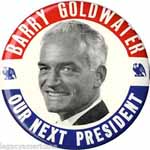 “As many as 23 of the 24 voting delegates may line up behind the Arizona senator on the first ballot Wednesday night,” The Courier-Journal’s Richard Harwood reported on the front page from the convention city of San Francisco.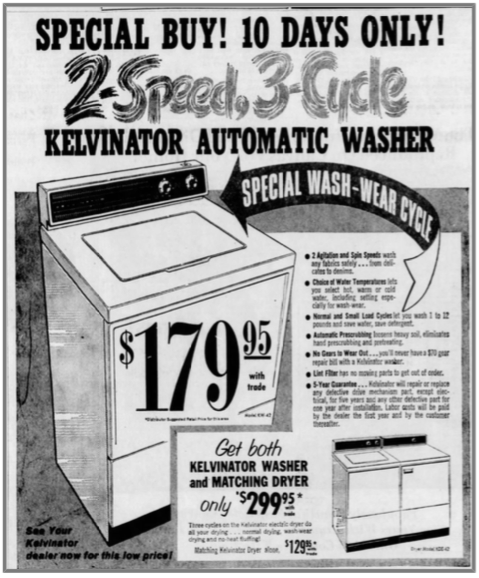


 Boulevard