Category: Entrepreneurs

Texas Roadhouse is the biggest Louisville-based restaurant chain you’ve never heard of

Texas Roadhouse
Founded in 1993, the company now has nearly 500 restaurants and 48,000 employees.

Boulevard focuses on news about some of Louisville’s biggest employers, nonprofits, and cultural institutions. This is one in an occasional series about them.

Put your books away; it’s time for a pop quiz!

Ever heard of a Louisville-based restaurant chain called KFC? Of course you have. Papa John’s? Certainly.

Now, what about that other big Louisville-based chain: Texas Roadhouse. Not so much?

KFC (15,000 restaurants in more than 125 countries) and Papa John’s (4,700 stores, 37 nations) are better known in Louisville at least partly because they’re older, and promote themselves more locally. There’s the KFC Yum Center downtown, and Papa John’s Cardinal Stadium at the University of Louisville. And who hasn’t seen Papa John’s founder John Schnatter in one of his ubiquitous TV commercials?

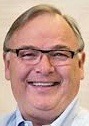
Kent Taylor
Taylor

But Texas Roadhouse has come a long way, too — and in a relatively short time. Chairman and CEO Kent Taylor started the steakhouse chain in 1993 with a single restaurant in southern Indiana. Some 23 years later, it’s grown to nearly 500 company-owned and franchised restaurants in 49 states plus five foreign countries, and 48,000 employees.

That three big restaurant companies are all based in Louisville isn’t a huge surprise given an economic principle with an unwieldy name: agglomeration. That’s where companies beget other companies in the same industry nearby, all benefiting from the increasingly specialized labor pool and economies of scale: for example, intellectual property attorneys experienced in the fast-food trade.
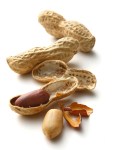
Peanut shells
Western theme peanut shells.

Taylor, for one, started out as a KFC manager in 1990, when he returned to his Louisville hometown. Three years later, he opened the first Texas Roadhouse, in Clarksville, Ind. The restaurants are known for their western themes, line-dancing servers, peanut shell-strewn floors, and Texas Red Chili and ribs.

The company went public in 2004. Its headquarters is at 6040 Dutchman’s Lane.

Now 60, Taylor is the biggest individual stockholder, with 4.4 million shares, or 6.2% of all, according to the 2016 shareholders’ proxy report. His stake was worth more than $200 million in June 2016, when shares were trading at a record high of $46 each.

What Papa John’s, Apple and Google have in common. (Hint: many of you own one)

Boulevard focuses on news about some of Louisville’s biggest employers, nonprofits, and cultural institutions. This is one in an occasional series about them.

John Schnatter
Schnatter

Some of the most successful U.S. companies got launched in garages, and Papa John’s story begins there in 1984 — sort of. It involves a car, specifically founder John Schnatter‘s prized gold 1972 Camaro Z28. After graduating from Ball State University with a business degree, Schnatter sold it for $2,800 to help save his father’s tavern, Mick’s Lounge, from bankruptcy.

“He knocked down the broom closet of Mick’s Lounge,” the company says on its history page, “purchased used restaurant equipment, and began delivering pizzas out of the back of the bar.”

Schnatter's Camaro
The famous car.

Only a year later, Schnatter opened his first Papa John’s in Jeffersonville, Ind. More than 30 years later, it’s now a fast-food giant with 4,700 restaurants worldwide — including more than 1,200 international restaurants in 37 countries and territories. It has 750 employees in Louisville, and another 21,000 across the globe. The company went public in 1993.

The company’s success has made Schnatter — born Nov. 23, 1961, in Jeffersonville — one of Kentucky’s wealthiest residents. His 10.5 million shares were worth well over $600 million in June 2016, enough to buy naming rights to 55,000-seat Papa John’s Cardinal Stadium at the University of Louisville.

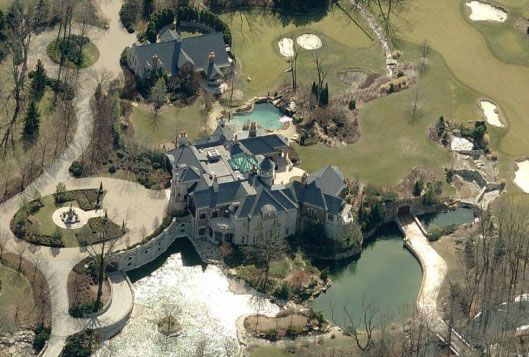
And, of course, there’s his famous Anchorage home: a 40,000-square-foot castle on 16 acres. It features a 22-car underground garage (complete with an office for valet parking, a car wash and even a motorized turn able to move limousines), and a 6,000-square-foot detached carriage house, according to Curbed. The real estate site called it “utterly bonkers,” and posted this aerial photo:

John Schnatter's house

The photo doesn’t appear to show the helicopter landing pad WDRB said spurred neighborhood noise complaints last month.

And the prized Camaro? In 2009, Papa John’s announced a $250,000 reward for the car, leading to its recovery. A replica now sits in the lobby of Papa John’s headquarters at 2002 Papa John’s Blvd.

In Brown-Forman’s first family, an exceptional tale of beating the odds for 150 years

Boulevard focuses on news about some of Louisville’s biggest employers, nonprofits, and cultural institutions. This is one in an occasional series about them.

The spirits and wine company best known for its Jack Daniel’s, Old Forrester and Korbel brands is one of Louisville’s most storied companies. George Garvin Brown, a young pharmaceuticals salesman, started it in 1870 with $5,500* in saved and borrowed money.

Nearly 150 years later, his fifth-generation descendants sit on the board of directors, which George Garvin Brown IV chairs. And the company employs 4,000 people worldwide, with 1,000 in the Louisville area at the headquarters at 840 Dixie Highway and elsewhere.

Garvin Brown IV
Garvin Brown IV

The Browns control the company through their majority ownership of the voting Class A shares — a stake worth more than $10 billion, making them America’s 20th most-wealthy family, according to Forbes magazine. The Browns and the company are major supporters of Louisville cultural institutions, including the Speed Art MuseumFrazier Museum, and Actors Theatre.

The family’s hold on Brown-Forman is exceptionally rare in American business. More than 30% of all family-owned companies survive into the second generation, according to the Family Business Alliance. But the numbers dwindle rapidly after that: Just 12% make it to the third generation, and a slim 3% survive to the fourth and beyond. With the ascension of three new fifth-generation Browns to the board of directors Thursday, Brown-Forman is now firmly in fifth-generation hands.

To be sure, there are other resilient families. Just last month, Walmart announced a third generation member — Helen and Sam Walton’s grandson, Steuart Walton — was joining the board. The Mars family still owns their candy company, 105 years later. And the Sulzbergers are grooming a fourth generation to run The New York Times.

But other clans are struggling: The Redstones are now embroiled in a jaw-dropping battle over a $40 billion empire that includes Viacom and CBS. A family fight over the future of the Al Schneider real estate fortune has pit sisters against sisters. And we all know about the collapse of the Bingham family’s media holdings amid third-generation infighting in the 1980s.

In Thursday’s reshuffling of the board room, the Browns hope to avoid that fate.

Kindred is a home-grown Louisville company that almost wasn’t

Kindred headquarters
The hospital and nursing home giant’s headquarters at Fourth and Broadway.

Boulevard focuses on news about some of Louisville’s biggest employers, nonprofits, and cultural institutions. This is one in an occasional series about them.

Kindred Healthcare traces its history to the 1985 launch of a predecessor, Vencor, that ran long-term acute care hospitals. By 1999, Vencor had morphed into a much bigger enterprise, with 300 nursing homes and 60 hospitals — and too much debt. Then it got clobbered when the federal government cut Medicare payments at a time when they accounted for 30% of a typical nursing home’s revenue.

Unable to pay its bills, Vencor sought Chapter 11 bankruptcy court protection in September 1999 after suffering staggering losses: $600 million in the fourth quarter of 1998 and $64 million in the first half of 1999, according to The New York Times. Vencor warned shareholders that its very survival was at stake.

But less than two years later, April 2001, it emerged from court protection with a new name, Kindred, and a new business plan. It is now a stronger and bigger company that sums up its operations in a very long sentence:

“Kindred through its subsidiaries had approximately 102,000 employees providing healthcare services in 2,692 locations in 46 states, including 95 transitional care hospitals, 18 inpatient rehabilitation hospitals, 90 nursing centers, 19 sub-acute units, 604 Kindred at Home home health, hospice and non-medical home care sites of service, 100 inpatient rehabilitation units (hospital-based) and a contract rehabilitation services business, RehabCare, which served 1,766 non-affiliated sites of service.”

Considerable growth came last year when Kindred completed its $1.8 billion takeover of Gentiva Health Services, a big Atlanta-based provider of hospice services, at-home nursing care and physical therapy. That deal was announced in October 2014.

Kindred is one of only four Louisville companies in the Fortune 500 list of biggest businesses. In June 2016, it was ranked No. 372 — a big leap up from 491 in 2015. (The other three in Louisville are Humana, No. 52; Yum Brands, 218; and Brown-Forman, 702.)

Benjamin Breier
Breier

Kindred is still growing. It broke ground this year on an expansion of its headquarters at Fourth and Broadway, to house up to 500 new employees in the years ahead. The company is led by CEO Benjamin Breier.

Not to be missed: Kaleidoscope, an online gallery of writing, photography, and other artwork created by Kindred’s patients and residents.

In Yum’s history, 11 herbs and spices became a recipe for a fast-food giant

Boulevard focuses on news about some of Louisville’s biggest employers, nonprofits, and cultural institutions. This is one in an occasional series about them.

Harland Sanders
Sanders

Louisville-based Yum Brands traces its corporate roots to one of the most-recognized entrepreneurs — and cooks — in the world: Col. Harland Sanders. He launched his iconic Kentucky Fried Chicken chain in 1930 from his roadside restaurant in Corbin, Ky., during the Great Depression.

It grew into a business giant based on his secret recipe of 11 herbs and spices. In 1964, at age 73, Sanders sold the chain for $2 million ($15 million in 2016 dollars) to a partnership led by Kentucky businessman John Y. Brown Jr. (a lawyer and future governor of the state) and Jack C. Massey, a venture capitalist.

In the 1970s and 80s, KFC passed through a series of owners, ultimately getting acquired by PepsiCo.

The beverage giant added Pizza Hut in 1977, and Mexican fast-food chain Taco Bell in 1978 — and then it spun off all three into Tricon Global Restaurants in 1997. Tricon made Louisville its corporate headquarters, and then adopted the name Yum! Brands. (Boulevard doesn’t use the exclamation mark because it looks like a typo to readers who aren’t familiar with the brand!)

With nearly 43,000 restaurants in more than 130 countries and territories, Yum is now one of the biggest restaurant chains in the world. Its marquee brands — KFC, Pizza Hut and Taco Bell — are one of the biggest private employers, with a combined 505,000 employees; a majority of them work part-time. Revenues in 2015 exceeded $13 billion. It ranked No 218 in the Fortune 500 in June 2016.

Greg Creed
Creed

In Louisville, Yum employs 1,000 at the corporate headquarters as well as KFC’s U.S. division offices. In early 2016, however, CEO Greg Creed and the four other top executives shifted to Plano north of Dallas, where the company’s biggest two divisions, KFC Global and Pizza Hut, are headquartered. Allaying concerns that Yum’s corporate headquarters might move, too, a spokesman told WDRB in February 2016 the executives would work from Louisville one or two weeks per month. Taco Bell is based in southern California’s Irvine.

Sanders’ affiliation with KFC hasn’t entirely ended. He continued as a spokesman for many years after he sold the chain to Brown and Massey. He died in 1980 at Jewish Hospital and was buried in Cave Hill Cemetery before a monument designed to look like the KFC-Yum headquarters, at 1441 Gardiner Lane. For many years, his grave has been the most-visited there.

Last year, Yum resurrected the colonel — actually, former Saturday Night Live comedian Darrell Hammond — to boost sales. But the new series of commercials that followed have gotten mixed reviews. Here’s one: