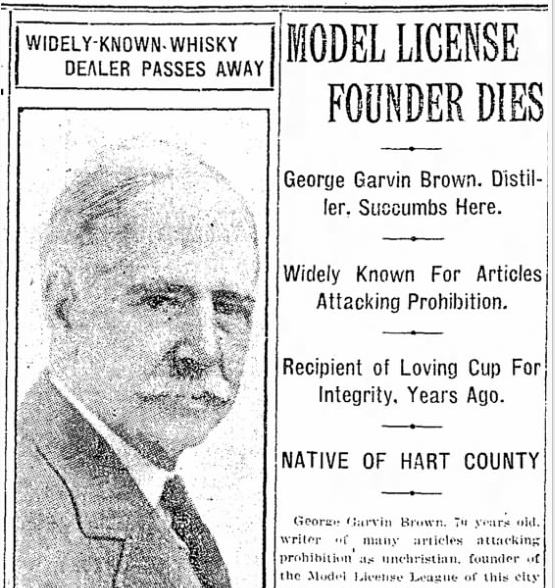
Today’s the Brown-Forman founder’s birthday. Born in Munfordville, Ky., on Sept. 2, 1846, Brown moved to Louisville in 1862, where he attended Male High School. He worked as a pharmaceuticals salesman until starting the future whiskey giant in 1870 with the original Old Forester brand, when he was 24 years old. Brown married Amelia Bryant Owsley in 1876, and they had two children, Owsley and Robinson. George died Jan. 24, 1917 and is buried in Cave Hill Cemetery.
His death at age 70 was front-page news the following day in The Courier-Journal:
“‘In Living Color’ is this old comedy show, and Damon Wayans and David Alan Grier would play these characters who were so gay — like gayer than us! — and they would wear these tiny hats and puffy shirts and would review movies. And if they liked the movies, they would give it ‘two snaps.'”
— Comfy Cow co-founder Roy Koons-McGee, in a new Modern Louisville magazine story, explaining how the company developed one of the funny name for their ice cream: Ginger Two Snaps.
The company designed the Evans Williams Bourbon Experience downtown.
Solid Light is consolidating operations at a newly bought SoBro building two blocks south of Broadway to house all its approximately 30 employees designing exhibits for museums and other corporate clients.
Torp
The company bought the building at 804 South Fifth St. for $1.7 million on June 15; it was previously occupied by CED Industrial Solutions and, before that, E&H Electric Supply. Solid Light is moving from 438 South Third St. and a fabrication shop in Bluegrass Industrial Park in eastern Jefferson County, according to The Courier-Journal and Business First.
Boulevard focuses on news about some of Louisville’s biggest employers, nonprofits, and cultural institutions. This is one in an occasional series about them.
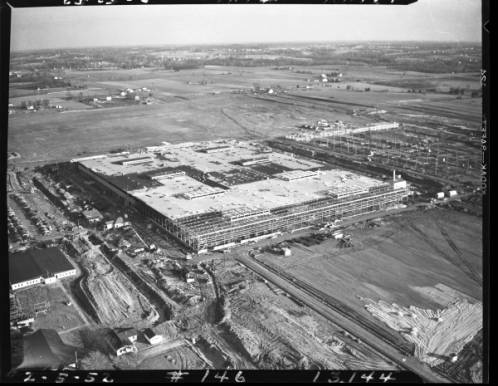
Louisville’s economy was sizzling in 1951, when General Electric’s nearly 50-year-old home appliances business started construction on what would become one of the city’s single-biggest factory complexes. Louisville’s population had soared 15% in the previous decade, to 369,000, after World War II’s end shifted the U.S. economy back to peacetime prosperity.
Edison in 1922.
GE appliances traces its history to 1905. But through its corporate parent and original driving inventor, it really extends even further back, to 1866. That’s when 18-year-old Thomas Edison moved to Louisville to work for Western Union. He spent most of his spare time tinkering, eventually losing his job. Many career moves later, he’d amassed a stack of patents for electrical inventions. The financier J.P. Morgan and a partner cobbled them into a company that formed the basis of General Electric.
That was the goliath that in the late 1940s and ’50s raced to meet post-baby boom consumer demand for toasters, mixers and “white goods” with the latest features — like the two-in-one freezer-fridges advertised in the 1952 TV commercial, top of this page.
Appliance Park would eventually cover 1,000 acres in the county’s south end, with more than a dozen manufacturing, warehousing and power-generation buildings.
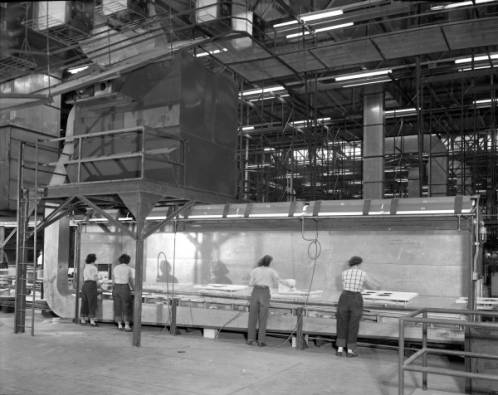
With Ford, International Harvester and other big manufacturers, GE launched a solid middle class with good wages and benefits that became the foundation of Louisville’s economy. At one time, the park employed 25,000 workers. It was a self-sufficient city providing many of its own needs, right down to mail handling.
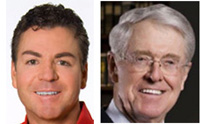
Ball State University is the latest school to defend another multimillion-dollar gift from one of its most famous graduates, Papa John’s founder John Schnatter, to establish an institute promoting the virtues of free enterprise.
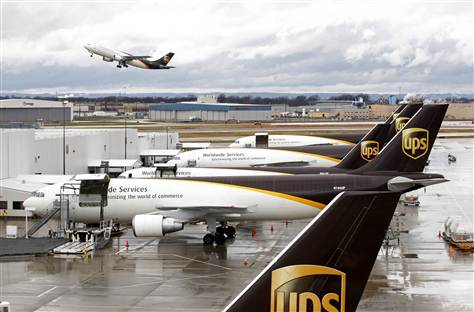
UPS started its hub at Louisville International Airport in 1982.
Boulevard focuses on news about some of Louisville’s biggest employers, nonprofits, and cultural institutions. This is one in an occasional series about them.
The first time many people in Louisville heard of United Parcel Service was in a May 1938 issue of The Courier-Journal, when syndicated columnist Dale Carnegie wrote about 11-year-old James E. Casey walking down a sidewalk in Seattle, and catching sight of a Special Delivery wagon pulled by a team of high-stepping horses.
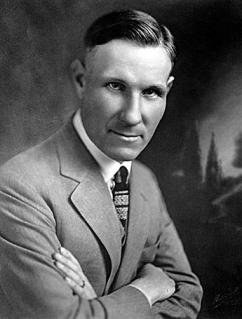
Casey in an undated photo.
“I’m going to have a team of horses and deliver things for people,” Casey said that day in 1899, in Carnegie’s retelling. Casey eventually started the American Messenger Co. with seven boys delivering packages by bicycle.
By the time Carnegie’s column appeared, the company was called United Parcel Service and employed 2,500 employees delivering as many as 500,000 packages a day during the Christmas rush.
Nearly 80 years later, UPS has become a giant in shipping worldwide, with Louisville the heart of a global network of 12 major air hubs. It employs 22,000 workers at the Worldport hub at Louisville International Airport. It’s the biggest fully automated package handling facility in the world, according to UPS. It turns over approximately 130 aircraft daily, processing an average of 1.6 million packages a day, with a record of nearly 5 million packages processed on peak day 2013.
(If it was a city, Worldport would rank as Kentucky’s 17th biggest by population — one rung ahead of Radcliff in Hardin County.)
UPS has had a hub in Louisville since 1982, when it was expanding into air service to meet growing demand for faster delivery. Louisville was a logical choice because it’s centrally located in the U.S. Since then, it’s been through two $1 billion expansions here. Driven by growing demand for e-commerce, especially via Amazon, UPS announced plans in May 2016 to spend another $300 million to boost capacity.
This time-lapse video shows some of the activity that takes place during each sort.
Founder Casey died in 1983, at age 95. Today, UPS is headquartered in Atlanta. Its $58 billion in revenue last year ranked it No. 48 on the Fortune 500 list of biggest companies. Worldwide, it has 440,000 employees. It’s been a publicly traded company since November 1999. David Abney has been chairman and CEO since 2014.
News about business and culture in Louisville, Ky.

 “‘In Living Color’ is this old comedy show, and Damon Wayans and David Alan Grier would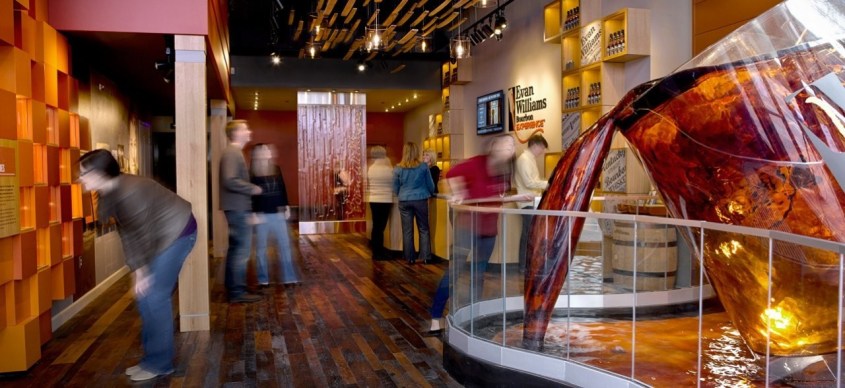


 Boulevard