Founded in 1993, the company now has nearly 500 restaurants and 48,000 employees.
Boulevard focuses on news about some of Louisville’s biggest employers, nonprofits, and cultural institutions. This is one in an occasional series about them.
Put your books away; it’s time for a pop quiz!
Ever heard of a Louisville-based restaurant chain called KFC? Of course you have. Papa John’s? Certainly.
Now, what about that other big Louisville-based chain: Texas Roadhouse. Not so much?
KFC (15,000 restaurants in more than 125 countries) and Papa John’s (4,700 stores, 37 nations) are better known in Louisville at least partly because they’re older, and promote themselves more locally. There’s the KFC Yum Center downtown, and Papa John’s Cardinal Stadium at the University of Louisville. And who hasn’t seen Papa John’s founder John Schnatter in one of his ubiquitous TV commercials?
Taylor
But Texas Roadhouse has come a long way, too — and in a relatively short time. Chairman and CEO Kent Taylorstarted the steakhouse chain in 1993 with a single restaurant in southern Indiana. Some 23 years later, it’s grown to nearly 500 company-owned and franchised restaurants in 49 states plus five foreign countries, and 48,000 employees.
That three big restaurant companies are all based in Louisville isn’t a huge surprise given an economic principle with an unwieldy name: agglomeration. That’s where companies beget other companies in the same industry nearby, all benefiting from the increasingly specialized labor pool and economies of scale: for example, intellectual property attorneys experienced in the fast-food trade.
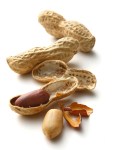
Western theme peanut shells.
Taylor, for one, started out as a KFC manager in 1990, when he returned to his Louisville hometown. Three years later, he opened the first Texas Roadhouse, in Clarksville, Ind. The restaurants are known for their western themes, line-dancing servers, peanut shell-strewn floors, and Texas Red Chili and ribs.
Now 60, Taylor is the biggest individual stockholder, with 4.4 million shares, or 6.2% of all, according to the 2016 shareholders’ proxy report. His stake was worth more than $200 million in June 2016, when shares were trading at a record high of $46 each.
Boulevard focuses on news about some of Louisville’s biggest employers, nonprofits, and cultural institutions. This is one in an occasional series about them.
Schnatter
Some of the most successful U.S. companies got launched in garages, and Papa John’s story begins there in 1984 — sort of. It involves a car, specifically founder John Schnatter‘s prized gold 1972 Camaro Z28. After graduating from Ball State University with a business degree, Schnatter sold it for $2,800 to help save his father’s tavern, Mick’s Lounge, from bankruptcy.
“He knocked down the broom closet of Mick’s Lounge,” the company says on its history page, “purchased used restaurant equipment, and began delivering pizzas out of the back of the bar.”
The famous car.
Only a year later, Schnatter opened his first Papa John’s in Jeffersonville, Ind. More than 30 years later, it’s now a fast-food giant with 4,700 restaurants worldwide — including more than 1,200 international restaurants in 37 countries and territories. It has 750 employees in Louisville, and another 21,000 across the globe. The company went public in 1993.
The company’s success has made Schnatter — born Nov. 23, 1961, in Jeffersonville — one of Kentucky’s wealthiest residents. His 10.5 million shares were worth well over $600 million in June 2016, enough to buy naming rights to 55,000-seat Papa John’s Cardinal Stadium at the University of Louisville.
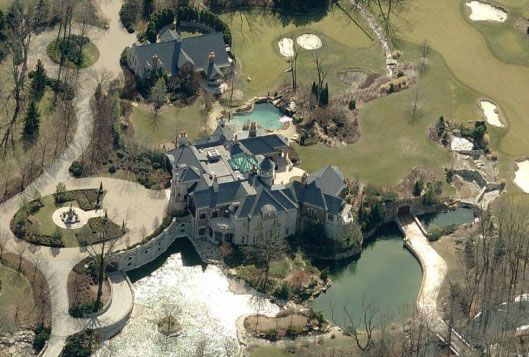
And, of course, there’s his famous Anchorage home: a 40,000-square-foot castle on 16 acres. It features a 22-car underground garage (complete with an office for valet parking, a car wash and even a motorized turn able to move limousines), and a 6,000-square-foot detached carriage house, according to Curbed. The real estate site called it “utterly bonkers,” and posted this aerial photo:
The photo doesn’t appear to show the helicopter landing pad WDRB said spurred neighborhood noise complaints last month.
And the prized Camaro? In 2009, Papa John’s announced a $250,000 reward for the car, leading to its recovery. A replica now sits in the lobby of Papa John’s headquarters at 2002 Papa John’s Blvd.
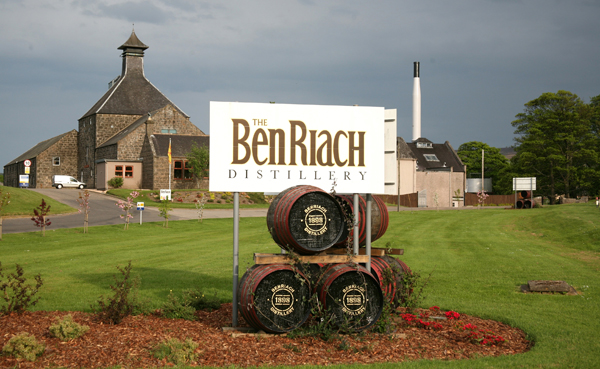
The distillery is in the Highlands of northern Scotland.
A news summary, focused on big employers; updated 3:47 p.m.
BROWN-FORMAN said today it had completed its previously announced acquisition of Scotland’s BenRiach Distillery Co. for £281 million ($405 million). The deal includes three BenRiach labels and brings Brown-Forman back into the single-malt scotch whisky business. “The GlenDronach, BenRiach, and Glenglassaugh single-malt brands are among the finest single malts in the world,” CEO Paul Varga said in a statement. The purchase includes three distilleries, a bottling plant, and the headquarters in Edinburgh. BenRiach was founded in 1826 — 44 years before Brown-Forman was launched (press release). Today’s announcement follows a published report two weeks ago that the Louisville spirits and wine company is considering selling its Finlandia vodka business amid a broader effort to focus on whiskey. Brown-Forman’s Louisville operations.
Bezos
AMAZON CEO Jeff Bezos told a high-profile technology conference last night that the retail giant isn’t aiming to compete head-on with UPS and other shippers it now partners with. Instead, Amazon wants to pick up the slack when delivery services can’t handle the final stretch. He cited India and the U.K. as examples. “We have had to take over a lot of the last-mile delivery in the U.K. over the last several years,” he told the Code Conference, in wide-ranging remarks. “The Royal Mail ran out of capacity at peak” (Bloomberg). Bezos did, however, hint at another motivation: wrangling better terms on delivery contracts. “Better prices on transportation would be acceptable to us,” he deadpanned (Recode). The Amazon founder was “equally comic, candid, and clever as he offered his views on artificial intelligence, data privacy, free speech, leadership, streaming video, and aerospace” (Fortune).
Elsewhere, Amazon is hiring more than 1,000 workers for its new 855,000 square-foot distribution center opening this summer outside San Antonio; the company already has six other Texas centers, including another one in the San Antonio area (Houston Chronicle). Amazon has five centers in Kentucky, including two in the Louisville area employing 6,000. And with more than 20,000 workers, UPS is Louisville’s biggest private employer.
TACO BELL‘s newest menu offering — a Chalupa with a fried chicken shell — is one of the “grossest fast food items ever offered” (New York Daily News). How it’s made (BuzzFeed). Also, the company has started construction on a restaurant in Nitro, West Virginia (WSAZ).
FORD recalled 1.9 million vehicles with certain Takata passenger-side frontal airbag inflators after Takata said the inflators were defective. The vehicles affected are 2007-2010 Ford Edge; 2006-2011 Ford Fusion; 2005-2011 Ford Mustang; 2007-2011 Ford Ranger; 2007-2010 Lincoln MKX, and 2006-2011 Lincoln MKZ, Zephyr and Mercury Milan (Reuters and press release); all about Takata’s airbag scandal. Separately, Ford said total U.S. vehicle sales in May declined 6% from a year ago, to 235,997. That was despite F-Series pickup sales posting a 9% gain, and van sales hitting their best May since 1978 (press release). Ford shares closed down 2.9% at $13.10.
KINDRED said it completed a deal where it’s buying four leased hospitals in Indianapolis, Houston, Denver and Colorado Springs, Colo., and selling two in Cleveland, one owned and another leased. The Louisville hospital and nursing home giant said it paid about $800,000 cash and additional cash consideration to Select Medical Holdings Corp. as part of the deal (press release). Separately, Kindred said it’s closing its Bashford Manor area nursing and rehabilitation center, where 153 employees care for 110 residents (Courier-Journal).
PAPA JOHN’S will be one of the first U.S. restaurant brands to enter Tunisia; it’s the second African country after Egypt to have one of the pizza chain’s franchises. The country in North Africa only recently opened its borders to franchising (Meat & Poultry). More about Tunisia.
GE is scaling back plans for a factory that will build big gas-powered engines in Welland, Ontario; the factory is now in Waukesha, Wisc. The company will create just 150 jobs at the new site, down from 350 at Waukesha, when it first announced the move in September. GE is taking advantage of tax incentives (CBC).
TEXAS ROADHOUSE got only a so-so review in Augusta, Ga., partly because of the restaurant’s signature item: steak. “My first bite of the filet seemed pleasantly salty, but as I went on, the meat was overwhelmed with salt — I couldn’t even finish it,” the reviewer said. “It was tender, but not the most tender filet I’ve ever had. And while I ordered it medium, it was more of a medium rare” (August Chronicle). The restaurant chain tweeted a recommended topping on Sunday:
In other news, the embattled Cahoots bar on Baxter Avenue in the Highlands is closing (Business First). Brawls had been a problem, leading a customer to post a truly gross review, complete with photo! “Blood on the men’s room sink,” wrote John R. “From one of the (many) fights I’ve witnessed at this place. Disgusting” (Yelp).
Boulevard reports extensively on executive pay at big local employers. But we also look at what folks are making down in the trenches and, in this case, elbow-deep in the dough. We caught this Craigslist help-wanted ad placed yesterday for a clutch of Boston-area Papa John’s restaurants. Because time is money, we’re giving you a condensed job description first, followed by the full monty for those with too much time on their hands.
The duties: Turn a profit. Hire lots of part-time employees every year, because turnover is high at fast-food restaurants. Find new customers, make sure they’re happy, and don’t give them food poisoning. Keep enough dough, tomato sauce, etc., on hand — but don’t waste any, either. Watch the till. And process a mind-numbing amount of paperwork.
What it pays: $40,000 to $65,000, including a potential $15,000 annual bonus. That would work out to $19.23 an hour on the low end and $31.25 on the high end, assuming a 40-hour week all year long. But let’s face it, this job could require twice as many hours, which means those hourly wages would be slashed in half.
A news summary, focused on big employers; updated 6:12 p.m.
Quarrels have broken out behind the scenes of Anthem’s proposed acquisition of Cigna, as the health insurers seek regulatory approval for their landmark $48 billion deal, according to a series of letters reviewed by The Wall Street Journal. “People on both sides say the squabbles could delay or derail antitrust approvals, which are typically harder to obtain if both parties aren’t in sync,” the Journal is reporting today.
The deal was announced July 24, three weeks after Aetna and Humana announced their own planned $34 billion tie-up, as big insurers sought scale and efficiency in a shifting U.S. health care industry. The Anthem-Cigna dissension suggests their proposal may fall behind in the regulatory review, worrisome because it’s “thought to have better odds if reviewed alongside Aetna-Humana,” the Journal says.
On Friday, Aetna CEO Mark Bertolini said he expected his company’s purchase of Humana would close during the second half of the year. He also said he couldn’t rule out the possibility Aetna might move its headquarters from its historic Hartford home once the deal is complete.
In other news, new federal overtime regulations could force employers to boost the pay of about 149,000 Kentuckians, although mostly at small and mid-sized companies. Starting in December, salaried employees earning $47,476 or less annually must be paid time-and-a-half for working more than 40 hours in a week; that’s twice the current level (Courier-Journal).
News about business and culture in Louisville, Ky.





 FORD recalled 1.9 million vehicles with certain Takata passenger-side frontal airbag inflators after Takata said the inflators were defective. The vehicles affected are 2007-2010 Ford Edge; 2006-2011 Ford Fusion; 2005-2011 Ford Mustang; 2007-2011 Ford Ranger; 2007-2010 Lincoln MKX, and 2006-2011 Lincoln MKZ, Zephyr and Mercury Milan (
 Boulevard reports extensively on
  Quarrels have broken out behind the scenes of Anthem’s proposed acquisition of Cigna, as the health insurers seek regulatory approval for their landmark $48 billion deal, according to a series of letters reviewed by The Wall Street Journal. “People on both sides say the squabbles could delay or derail antitrust approvals, which are typically harder to obtain if both parties aren’t in sync,”
  Boulevard