Tag: Culture

In Lee and Joan Thomas’ philanthropy, five-star giving without the five-star perks

By Jim Hopkins
Boulevard Publisher

A lot of big philanthropy comes with nice extras: private lunches hosted by ballet company directors; season tickets to the opera with box seats, and trusteeships that offer peerless networking with other A-listers. There’s nothing wrong with that; if you gotta keep the lights on and pay the heating bill, it sometimes takes a carrot or two to attract donors who wear a carat or three.

Image
Thomas

But there are plenty of other worthwhile charities that don’t offer the same social cachet — which leads me to Louisville’s Center for Women and Families, and the late Lee Thomas Jr., the retired businessman and philanthropist who died Tuesday at 90.

The center provides crucial support to victims of domestic violence and sexual assault. It runs a crisis hotline; two emergency shelters, and gives psychological and academic help for kids swept up in all that horror. I have Thomas and his wife Joan in mind because they gave the center $2.6 million last year, the bulk of the nearly $4 million their charitable foundation donated to 32 charities. That’s according to the Joan and Lee Thomas Foundation’s public annual IRS tax return for the year ended June 30, 2015; I leafed through it this morning.

To be sure, other generous Louisvillians give to the center, too. But what’s striking about the Thomas’ giving is the sheer concentration on charities that offer few of the five-star social extras. (KET tote bags don’t count.) This was workaday philanthropy to the Home of the Innocents, the Urban League, Planned Parenthood and other important but hardly glamorous causes; here’s a spreadsheet with all their 2015 donations.

The couple’s humility extended to their foundation’s official name, too, which barely identifies them: It’s simply called the J & L Foundation on charity tracker GuideStar.

Much more to come

Their contributions will no doubt continue; the foundation has a $19.5 million portfolio, enough to throw off nearly $1 million in annual contributions well into the future. Last year’s donations brought to $6.3 million the total given in 2013-2015 alone. It ranks in the top tier of Louisville’s biggest foundations and other non-profits based on asset size.

Vermont American logoThe Thomas’ focus on plain philanthropy is hardly surprising, because it reflects their Quaker faith; several of their other donations last year were to charities associated with the Friends General Conference.

Lee and Joan met at a Quaker work camp in 1948, The Courier-Journal says in his obituary. After marrying and moving to Louisville, in 1954 he started building up the former American Saw and Tool Co. — later called Vermont American Corp. — from a single-product supplier to Sears Roebuck & Co. into an international public corporation employing 5,000 people. It’s now a brand in the Robert Bosch Tool Co.

The Thomas’ were instrumental in establishing the ACLU’s Kentucky chapter in 1955, when local civil rights activists were defending a couple, Carl and Anne Braden, accused of being treacherous union sympathizers who fought racial segregation in housing. Lee Thomas also marched with the Rev. Martha Luther King Jr. in the city.

The ACLU mourned his death. “He put up the seed money to get our affiliate off the ground and continued to support our work for the next 61 years,” the chapter said on its Facebook page. “He was a giant for peace, justice, and equality for all. He will be missed, but his example will continue to inspire.”


Disclosure: I’m a card-carrying ACLU member and Planned Parenthood supporter.
Lee Thomas, businessman and philanthropist, is dead at 90

Image
Thomas

Lee B. Thomas Jr. helped found the ACLU of Kentucky and marched with the Rev. Martin Luther King Jr. in Louisville; he died yesterday, according to The Courier-Journal. Thomas and his wife established the Joan and Lee Thomas Foundation; with $19 million in assets, it ranks among the biggest in the city.

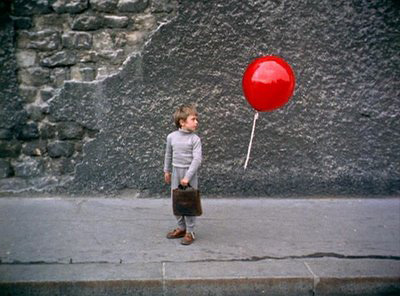
Sunday at 2 p.m. at the Speed Cinema: that charming French classic ‘The Red Balloon.’ (And it’s free!)

For its Global Speed program highlighting French culture, the museum is showing one of the most beloved children’s films of all time, 1956’s “The Red Balloon.” The Speed says: “What seems like only the story of a young boy and his balloon reveals itself to possess strong religious subtext as the boy fights to save his toy from danger.” Directed by Albert Lamorisse. 16-mm, 34 minutes.

Playing Sunday at 2 p.m., and every Sunday through Sept. 25. Check out the trailer:

Admission is free as part of the Owsley Sunday program. The free Sunday admission series through March 2021 is named in honor of the late Brown-Forman CEO Owsley Brown II.

Speed Art Museum logoThe 142-seat movie theater is part of the newly renovated museum’s expansion. It’s equipped with state-of-the-art technology, including 16-mm, 35-mm and DCI-compliant 4K digital projection systems.
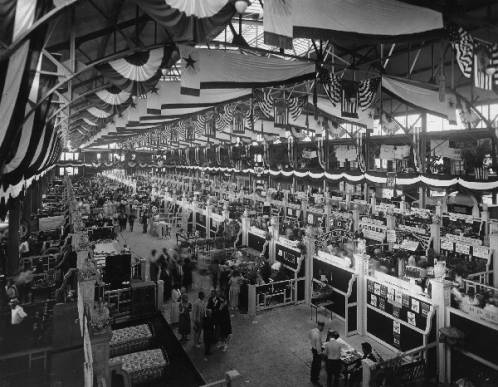
Big business at the Old State Fairgrounds, 1929

Merchants and Manufacturers State Fair 1929
The handful of people in the foreground offers a sense of scale.

This was the Merchants and Manufacturing Building, which had opened eight years before with the claim it was bigger than Madison Square Garden. Built at the old Kentucky State fairgrounds, the cavernous room was filled with company kiosks, including “Southern Star” and “Auto Insurance.”

The old fairgrounds were in the neighborhood now known as Chickasaw. In 1907, 150 acres were purchased at the end of Cecil Avenue, west of 38th Street and north of Gibson Lane, and the fair was held there a year later, according to the University of Louisville Photographic Archives, the source of this photo.

Kentucky State FairThe Kentucky State Fair is one of the oldest in the United States, according to the Filson Historical Society, dating to 1816, when Colonel Lewis Sanders of Fayette County organized the first one in the commonwealth. It became official in 1902 after being mandated by the Kentucky General Assembly.

In 1956 the fair was moved to the Kentucky State Fairgrounds and Exposition Center where it remains today. This year’s opened today and runs through Aug. 28. Admission, hours and more information here.

In FoodPort’s sudden failure, a rare defeat for Louisville’s blue-chip philanthropists: the Brown family

FoodPort rendering 600
An aerial rendering of 24-acre site at 30th Street and Muhammad Ali Boulevard.

By Jim Hopkins
Boulevard Publisher

For the past two years, developers of the West Louisville FoodPort worked mightily to bring urban farming and as many as 250 good jobs to the heart of a neighborhood yearning for a better future. Mayor Greg Fischer said the project would “change the look and feel of Russell forever.” Their ambitious, $35 million plan was going so well, one of the world’s foremost advocates of organic food paid a headline-grabbing visit last year: Prince Charles, heir to the British throne.

Stephen Reily
Reily

But yesterday, the entire enterprise collapsed when the non-profit developers, Seed Capital Kentucky, abruptly announced they’d lost a linchpin partner, and without enough time to find a replacement. “We don’t have a way to put it together,” Seed Capital co-founder Stephen Reily said. “We are deeply disappointed.”

Many, many other people were disappointed as well: the mayor, who’d pushed the project as a centerpiece for revitalizing the Russell neighborhood, only to see it steadily scaled back amid community infighting; some 150 residents who helped shepherd the project past months of political hurdles, and the Russell councilwoman, Cheri Bryant Hamilton, “heartbroken” last night over its failure, The Courier-Journal said.

But less publicized was the distress almost certainly felt by a high-profile Louisville family who had invested heavily in its development: the Browns, founders of the spirits giant Brown-Forman. It was an unusual defeat for a family that’s often in the vanguard of high-profile causes ending in resounding success.

Christy Brown
Brown

The Browns were there at critical junctures for the FoodPort, including last year’s goodwill tour by Prince Charles and his wife Camilla, the Duchess of Cornwall. In a speech at the Cathedral of the Assumption on that overcast Friday in March, the CJ reported at the time, “the prince credited his visit to the persuasive powers of Louisville philanthropist Christina Lee Brown, matriarch of the family that controls Brown-Forman.”

Indeed, in 0ne photo with the newspaper’s online story, the unidentified woman in an orange coat and strands of pearls, beaming in the royal couple’s wake during one of their walkabouts, is Christina, known to many in Louisville as Christy.

Augusta Brown Holland
Holland

As one of the city’s best-known philanthropists, she and her immediate family have formed the core of the extended Brown family’s support of Seed Capital. Her daughter, Augusta Brown Holland, an urban planner and investor, is one of the non-profit’s six board members. Another daughter, Brooke Brown Barzun, has a more direct line to Buckingham Palace: Her husband, Matthew Barzun, is U.S. Ambassador to the United Kingdom.

A tale of IRS tax returns

The Browns donate multimillions of dollars annually to charities from coast to coast, although especially in Louisville. But they don’t often seek attention for their contributions.

Prince and Christina 300
On the CJ: Camilla, Christy and Charles.

In fact, Seed Capital only hints at the family’s hefty financial support,
on a difficult-to-find page of its website with a barebones alphabetical roster of “funders.” Of the 16 names listed, six are Brown family members or their personal charitable foundations. A seventh is the source of their $6 billion fortune: Brown-Forman, the nearly 150-year-old producer of Jack Daniel’s and other well-known brands. And an eighth, the Community Foundation of Louisville, is home to at least 10 individual Brown donor-advised funds.

Brown family foundation public IRS tax returns fill in details. In 2012-2015, six of the foundations donated a combined Continue reading “In FoodPort’s sudden failure, a rare defeat for Louisville’s blue-chip philanthropists: the Brown family”

In films this weekend at the Speed, Herzog asks: ‘Have the monks stopped meditating? They all seem to be tweeting’

In this year’s “Lo and Behold,” The Oscar-nominated documentary filmmaker Werner Herzog “dissects the virtual world from its beginnings to its speculative future possibilities,” according to the Speed Museum Cinema. “Always asking provocative questions, Herzog investigates the ways the online world has transformed virtually every aspect of the way contemporary life is conducted — from business to education, space travel to healthcare and to how we as humans interact with each other.”

98 minutes. Rated PG-13. A selection of the 2016 Sundance Film Festival; BAM Cinefest and 2016 AFI Docs. Watch the trailer:

Tickets: $9, adults (non-Speed members); $7 members. Click on a showtime below for more details and to buy tickets.

About the cinema

Speed Art Museum logoThe 142-seat theater is part of the newly renovated museum’s expansion. It’s equipped with state-of-the-art technology, including 16-mm, 35-mm and DCI-compliant 4K digital projection systems.