Tag: Brown-Forman

Yum agrees to sell $464M stake in China unit ahead of spinoff; Haier to brand cooktops and ovens in U.K.; plus more (possibly) bad news about the (allegedly) leaked KFC recipe

A news summary focused on 10 big employers; updated 8:41 a.m.

YUM has agreed to an advance sale of a $464 million slice of its China operations to a prominent Chinese deal maker and the financial affiliate of Chinese Internet giant Alibaba. The deal announced this morning is with Primavera Capital and Ant Financial Services Group. They will buy the shares at an 8% discount to the average price at which Yum China’s shares trade between 31 and 60 days after they’re distributed to Yum shareholders in a spinoff expected by Oct. 31. Yum China will start trading on the New York Stock Exchange as an independent company on Nov. 1 under the ticker symbol “YUMC.”
Greg Creed
Creed

Louisville-based Yum also announced Primavera founder Dr. Fred Hu, former chairman of Greater China at Goldman Sachs, will become Yum China’s non-executive board chairman. In a statement, Yum CEO Greg Creed said: “The investments from Primavera and Ant Financial in Yum China mark another important milestone in our plans to separate the China business and create a solid foundation for Yum China” (Wall Street Journal and press release).

GE APPLIANCES owner Haier is filling a hole in its product lineup: It will begin to sell Haier-branded gas cooktops, induction cooktops and ovens in the U.K., beginning next year. China-based Haier hasn’t yet released prices or dates when they might appear in other countries, however. Haier bought Louisville-based GE Appliances for $5.6 billion in June, in a bid to gain a stronger presence in the U.S., where it has only 1.1% of the appliance market. The Louisville company employs 6,000 workers at Appliance Park in the south end (CNET).

KFC: YouTube vlogger Hellthy Junk Food has done a blind taste taste of real KFC fried chicken vs. that purportedly leaked super-secret recipe of 11 herbs and spaces founder Harlan Sanders created. Posted Tuesday, the video’d results have already drawn 75,000 views — and they don’t bode well for the chain:

BROWN-FORMAN: Financial news site Seeking Alpha  Continue reading “Yum agrees to sell $464M stake in China unit ahead of spinoff; Haier to brand cooktops and ovens in U.K.; plus more (possibly) bad news about the (allegedly) leaked KFC recipe”

Follow the money: A trail of footnotes and government documents leads to Insider Louisville’s front door

By Jim Hopkins
Boulevard Publisher

In business journalism, some of the most interesting news shows up in fine-print footnotes in documents companies file with government agencies. Hospital and nursing giant Kindred Healthcare is great example. Last spring in a statement to stockholders, it disclosed two special payments to top executives: $6 million to then-executive vice chairman Paul Diaz in connection with his leaving the CEO’s job, and $250,000 to Chief Financial Officer Steven Farberto help him escape a high-profile dispute with a Glenview neighbor. But to uncover that, you had to follow three different footnotes on a table showing how much they got paid overall.

Insider Louisville logoThis leads me to another footnote, of sorts — one that appeared on a story today at Insider Louisville, the online news site launched in 2010, and to a document I’ve run across at the Securities and Exchange Commission. Together, they open a window on who’s investing in Louisville’s news media at a time when the once-dominant Courier-Journal has been losing influence amid steep staff cutbacks, shifting the balance of power in Kentucky’s biggest city. They underscore the importance of news outlets everywhere telling readers who’s behind the scenes, and about any conflicts of interest owners may pose for their publication. (I’ve got disclosures of my own.)

This morning, at the bottom of a long story about the Humana Foundation, Insider Louisville editors added this disclosure: “One of the five directors of the Humana Foundation is David A. Jones Jr., an investor of Insider Louisville.”

David A. Jones Jr.
Jones

Jones is one of Louisville’s more influential residents. He’s on the board of directors of Humana itself, and his father, David A. Jones Sr., is a co-founder of the insurance giant. Jones Jr. is a partner at Chrysalis Ventures, the Louisville venture-capital firm he founded in 1993, and he’s chairman of the elected seven-person board overseeing the Jefferson County Public Schools. (Here’s Chrysalis’s portfolio of company investments; it doesn’t show Insider Louisville, which suggests this was a personal investment.)

Tom Cottingham
Cottingham

To be sure, close readers of Insider Louisville have known Jones was an investor for several years. In August 2014, owner Tom Cottingham told readers he’d brought in three new minority investors he knew from a prior venture: Jones; Doug Cobb, the former Greater Louisville Inc. CEO, and Jon Pyles, now the site’s vice president of marketing. The story — which carried only a “staff” byline — didn’t say how much they’d invested, nor the exact size of their stake. Cottingham said he remained the majority holder.

Douglas Cobb
Cobb

Now, though, an SEC document filed in April offers more clues about the publication’s investors, whom we learned this summer include a prominent heiress to the glittering Brown-Forman whiskey fortune. I can’t find any mention of the regulatory filing on Insider Louisville’s website, nor in any other media outlet in Louisville. My readers may well correct me after I publish this post; in any case, this is certainly the first time I’m writing about it.

The April 12 document shows that Insider Louisville LLC raised $975,000 from 12 investors in a $1.5 million stock offering that drew the first investment March 31. It didn’t identify the investors by name, however, and it didn’t say how big their stakes were. The first $450,000 was to pay down an undisclosed amount of debt, according to the document; anything left over would go to any of its directors: Jones, Cottingham, and a third named Jamie Wilson. (Who’s Wilson? I haven’t figured that out; maybe one of my readers knows.)

Minimum investment: $25K

Continue reading “Follow the money: A trail of footnotes and government documents leads to Insider Louisville’s front door”

UPS pilots agree to 5-year pact with 15% pay hike; B-F dives 4% on quarterly results; plus former KFC store goes to pot — a missed opportunity, BTW

A news summary focused on 10 big employers; updated 6:05 p.m.

UPS‘s 2,500 pilots have overwhelmingly ratified a five-year labor contract with a bonus up to $60,000 per pilot, an immediate increase in base pay, and “more favorable” rest policies for overnight and international flights. The contract, which starts tomorrow, includes an immediate 14.7% pay hike, followed by annual increases of 3% over the life of the deal, the pilots association said today (WDRB). The shipper is Louisville’s single-biggest private employer, with 22,000 workers at its Louisville International Airport hub; more about UPS here.

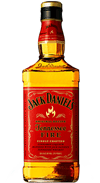
Jack Daniel's Fire
Fire

BROWN-FORMAN said fiscal first-quarter revenue fell 5% to $856 million and earnings dropped 2% to 36 cents per share, citing weaker-than-expected results in emerging markets and a stronger U.S. dollar. The results were in line with analysts forecasts. The spirits giant also cited tough comparisons from a year ago on its flagship Jack Daniel’s, which lapped last year’s introduction of cinnamon-flavored Tennessee Fire in the U.S. Sales of Finlandia — the vodka brand rumored to be on the auction block — dropped 10% reported as results in Poland “stabilized somewhat” while they remained under pressure in Russia, given the “challenging economic backdrop” and ruble depreciation (press release). Brown-Forman has now filed its more detailed quarterly 10-Q report with the Securities and Exchange Commission. Both classes of the company’s stock fell more than 4% in the first 45 minutes of trading before recovering. The more actively traded non-voting B shares ended the day at $48.55, down $1.78, or 3.5%.

PIZZA HUT: The manager of a Pizza Hut outlet in Tokyo’s Koto Ward and three accomplices were arrested for allegedly beating the store’s deputy manager with a lead pipe and stealing 1.4 million yen (U.S. $13,500) from a safe on May 1. The victim suffered serious injuries including a fractured left arm which required more than two months to heal, police said (Tokyo Reporter).

TACO BELL and KFC: In Houston, police are investigating a smash-and-grab attempted burglary after someone crashed a vehicle into a combination Taco Bell-KFC restaurant on the city’s northeast side early today. The front doors and some of the interior were damaged, but it didn’t appear anything of value was taken (KHOU).

KFC Pittsfield
The former KFC location has already gone to weeds (heh).

And in Pittsfield, Mass., the appropriately named Happy Valley Compassion Center is proposing to open a medical marijuana dispensary in a former KFC restaurant building. Side note: It occurs to Boulevard that opening a KFC or any other fast-food outlet next to a marijuana store would be an excellent way to sell to customers with the munchies (Berkshire Eagle).

Slime time: In the genteel world of old-money philanthropy, pizza king Schnatter is busting loose

By Jim Hopkins
Boulevard Publisher

When Tom Jurich chases the money John Schnatter gives to charity every year, it’s the ever-prowling cats that pose competition.

No — not those ones. I’m referring to the snow leopard and other big cats at Louisville Zoo, just five miles from Papa John’s Cardinal Stadium, the University of Louisville colossus about to undergo a $55 million renovation that athletics director Jurich wants done in just two years.

Schnatter, 54, loves U of L. He’s donated more than $20 million to the 22,000-student school over the past decade, winning naming rights for his Louisville-based pizza chain for decades to come. (And Schnatter’s a Ball State graduate, to boot.)

Papa John's logoBut he also likes other charities — especially the zoo, according to the most recent IRS tax returns for his John H. Schnatter Family Foundation, which filed its 2015 return only last week. The returns show the foundation gave $111,000 to the zoo in 2012-2015; only one other recipient — U of L — got more, among the dozens of charities Schnatter and his wife Annette support. And that was on top of $1.1 million they donated to the zoo in 2008. To be sure, the zoo was just barely ahead of No. 3 on the foundation’s gift list (keep reading).
The returns offer an inside look at how one of the city’s richest couples — we’re talking $800 million — positions themselves in a pecking order where the right kind of philanthropy is the ticket to top-drawer society. This much is clear: the Schnatters don’t give a flying fig about old-money Louisville. They’re passing on virtually all the usual suspects: the Speed Museum, Actors Theatre, Kentucky Opera, the Fund for the Arts — cultural war horses favored by more established families like the Browns and their 150-year-old whiskey fortune, or the Binghams and their faded media empire from 1918.

Instead, the Schnatters devoted their relatively modest $1.9 million to 86 charities over the four years I examined, focused heavily on helping children and veterans; animal welfare and — crucially, for anxious development officers — advancing John Schnatter’s growing interest in free enterprise and limited government.

But he’s never been old money, anyway.

1980s: bustin’ out

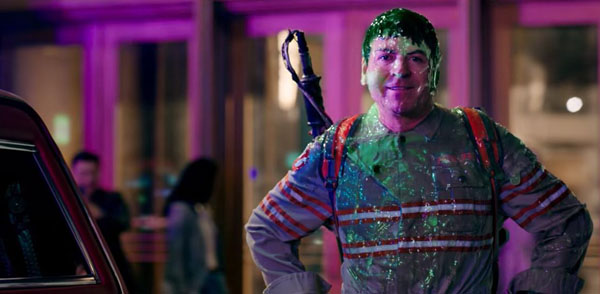
After graduating from Ball State University in 1983, Schnatter started Papa John’s in a broom closet at his father’s tavern, Mike’s Lounge, which he famously saved from ruin with $2,800 he got selling his prized 1972 Camaro. Nearly 32 years and many millions of pies later, he stars in his own TV commercials blanketing the air, proving he’s not above getting dirty to make a sale — literally. In a Sony Pictures marketing tie-in this summer, he played a slimed Ghostbuster pizza delivery guy; that’s a still photo, top of page. (Can you imagine Brown-Forman Chairman George Garvin Brown IV dressed as a dancing mint julep for an Old Forester spot? Neither can I.)

Tom Jurich
Jurich

No matter. Schnatter’s laughing all the way  to the bank. Today, Papa John’s has more than 4,700 restaurants in 38 countries and territories. Its 22,000 employees include 750 in Louisville. And his stake in the $2.8 billion behemoth just soared past $800 million for the first time. That’s a lot of loot that’s arrived relatively fast. On a split-adjusted basis, Papa John’s stock has increased six-fold in the past five years alone. The question over at U of L: How much of that will Jurich wrangle for his $55 million stadium project? Continue reading “Slime time: In the genteel world of old-money philanthropy, pizza king Schnatter is busting loose”

Schnatter trims holdings by another $873K, new SEC filing shows; mourners recall pregnant Calif. Taco Bell employee killed in crash; and UPS to launch expansion

A news summary, focused on 10 big employers; updated 5:12 p.m.

PAPA JOHN’S founder and CEO John Schnatter sold 11,500 shares this week at $76 each for a total $873,000, according to a new Securities and Exchange Commission filing yesterday.

To put Schnatter’s $873,000 profit in perspective, consider this: His pizza chain is running a help-wanted Craigslist ad in the Louisville area right now for delivery drivers, promising as much as $20 an hour, with tips. At that rate, a driver would need to work 40 hours a week, 52 weeks a year, for 21 years to make what Schattner, 54, earned with a few keyboard strokes this week.

And he still owns a lot more stock. The trades were made Monday and Tuesday, and left him with a still-huge stake: 10 million shares worth $758 million at yesterday’s closing PZZA price of $75.80. With options, the figure rises another $40 million.

HUMANA declared a regular quarterly dividend of 29 cents a share payable on Oct. 28 to stockholders of record Oct.13 (press release).

Dulce Capetillo
Capetillo

TACO BELL: In San Jose, Calif., last night dozens of mourners remembered Dulce Capetillo, the pregnant 18-year-old Taco Bell employee killed in a car crash last week on the way to picking up her husband, who worked for the fast-food chain during the late shift at another outlet. Doctors saved their infant son, Christopher; he’s now eating from a bottle and no longer tethered to medical equipment. By yesterday, nearly $17,000 had been raised to cover Capetillo’s funeral costs and Christopher’s medical bills, with Taco Bell contributing toward the total (Mercury News). In Louisville, the fast-Mexican chain delivered free lunch yesterday to Louisville Metro Police headquarters as it made amends for an embarrassing incident last week, where employees at a Taco Bell on Preston Highway near Phillips Lane initially balked at serving five LMPD officers (WDRB).

UPS will hold a ceremonial groundbreaking for its previously announced $310 million expansion of the company’s giant shipping hub at Louisville International Airport; the project is expected to add 300 jobs over the next 18 months to the 22,000 already there (Courier-Journal). UPS is the city’s single-biggest private employer; more about the shipper’s local operations.

BROWN-FORMAN turned to automation in an expansion of its Jack Daniel’s distillery operations in Lynchburg, Tenn., according to a new and very wonky account in a trade publication (Automation World).

Beverage alcohol industry pushing back against new regulatory pressure, as views shift on moderate drinking

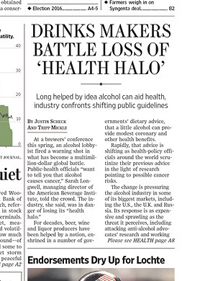
For some 40 years, producers of liquor, wine and beer have been helped by the notion, enshrined in the dietary advice of a number of governments, that a little alcohol can provide modest coronary and other health benefits. But now, according to a new Wall Street Journal story today, that advice is shifting rapidly, as health-policy officials around the world scrutinize previous advice amid new research pointing to possible cancer risks.

WSJ detail August 23 2016“The change is pressuring the alcohol industry in some of its biggest markets, including the U.S., the U.K. and Russia,” the front-page story says. “Its response is as expensive and sprawling as the threat it perceives, including attacking anti-alcohol advocates’ research and working with governments to formulate policy. Alcohol companies are also funding their own research, including a plan by four companies to contribute tens of millions dollars toward the cost of a rigorous study.”
In Louisville, Brown-Forman could be swept up in the shifting regulatory tides. The nearly 150-year-old companies sells its flagship Jack Daniel’s and nearly 20 other brands in about 160 nations around the globe.

A review of its regulatory filings shows the company has grown increasingly concerned about changes in public views about alcohol consumption, including moderate drinking. In its 2015 annual report to the Securities and Exchange Commission, for example, it added a new passage to the business risks section that highlighted the possibility of “significant additional labeling or warning” requirements.

“Our products already raise health and safety concerns for some regulators,” the company warned investors, “and heightened requirements could be imposed. If additional or more severe requirements of this type become applicable to one or more of our major products under current or future health, environmental, or other laws or regulations, they could inhibit sales of such products.”

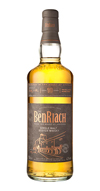
BenRiach scotchBut Brown-Forman’s rising concerns date to at least 2012, when it flagged the possible consequences of any new health research that could lead to heightened government scrutiny and controls. Its risk warning in that year’s report said: “If future research indicated more widespread serious health risks associated with alcohol consumption, and particularly with moderate consumption, or if for any reason the social acceptability of beverage alcohol were to decline significantly, sales of our products could decrease materially. Our sales could also suffer if governments banned or restricted advertising or promotional activities, limited hours or places of sale or consumption, or took other actions that discouraged alcohol purchase or consumption.”

That advisory appears to have been prudent, given the shifting views on moderate consumption disclosed in today’s Wall Street Journal.

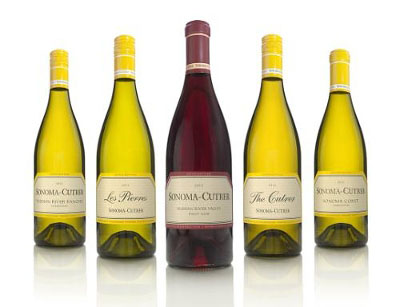
Photo, inset: Brown-Forman added the BenRiach brand when it bought the BenRiach Distillery Co. in June for $405 million; it just launched 15 new whiskies. In photo, top: the company’s Sonoma-Cutrer wines.